Center for Rehabilitation at Wilmington Hospital Expands to Meet Growing Demand for Care
Award-winning, CARF-accredited inpatient rehabilitation unit now 30 beds to serve more patients


Award-winning, CARF-accredited inpatient rehabilitation unit now 30 beds to serve more patients
 From left: Brian Matson, MPT, program manager; Jennifer Thomas, MBA, MS, FACHE, vice president of Rehabilitation Services; Kathy King, MSN, RN, assistant nurse manager; Julie Marsh, MPT, director of Rehabilitation Services; Jamie Ayala, DNP, RN, NEA-BC, RN-BC, chief nursing officer at Wilmington Campus and past nurse manager of Rehabilitation Services; John Cheng, M.D., medical director.
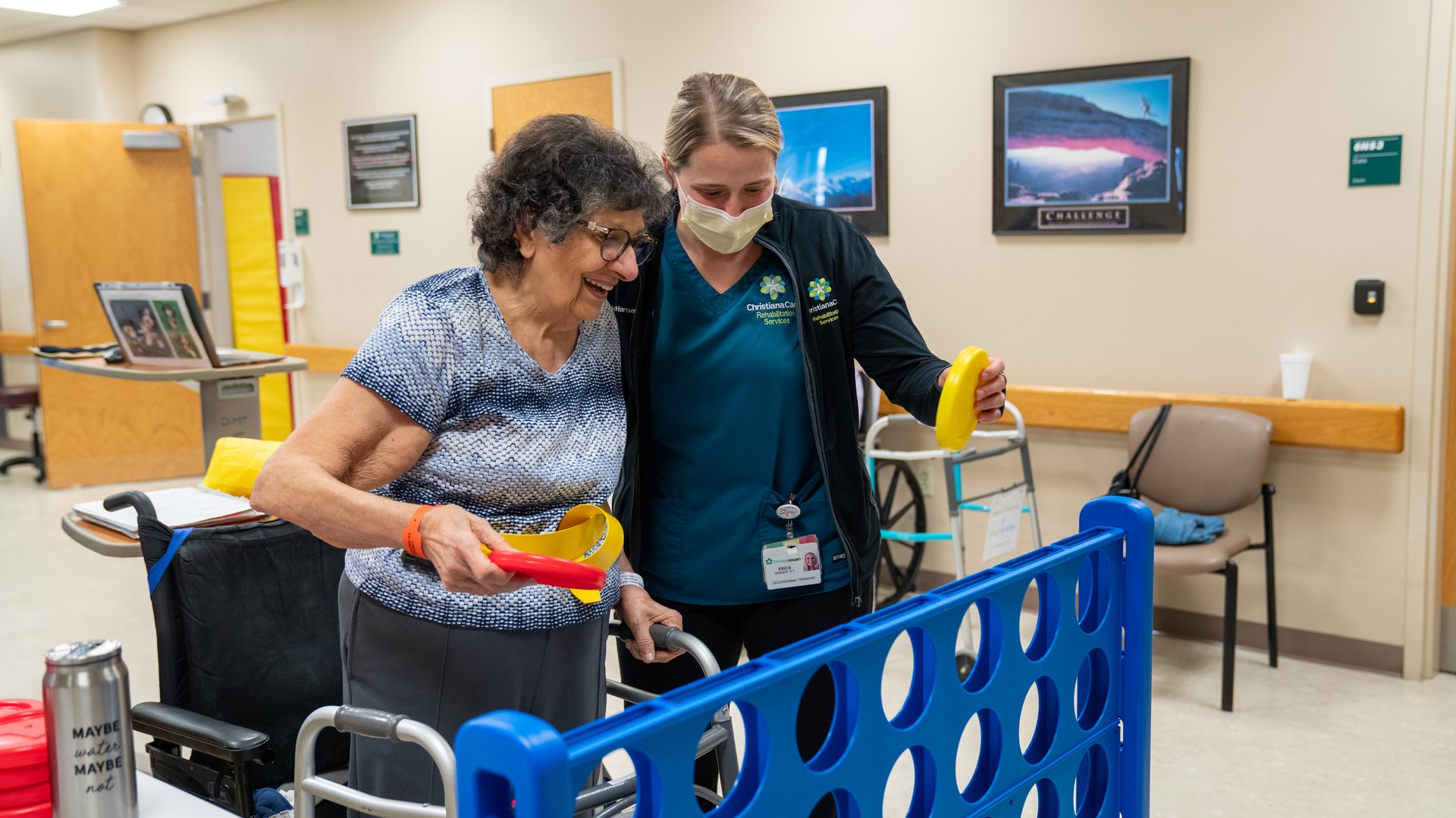
 A group rehabilitation therapy session features games to support speech.
 Center for Rehabilitation caregivers who manage group therapy sessions, from left, occupational therapists Rachel Titus and Jordan Goddard, speech-language pathologist Abby Hidalgo and physical therapist Karen Sanzone.
 Brad Sandella, D.O.