Login
Our In-Home Services & Support | HomeHealth - ChristianaCare
Rehabilitation Therapy Provided in Your Home
Rebuild strength, mobility and confidence – right at home.
Our in-home physical, occupational and speech therapy teams provide skilled rehabilitation after a hospital stay, surgery, illness, injury or other health changes that affect mobility, communication or daily function. Care is coordinated with your clinician and covered by many insurance plans when eligible.
What are Rehabilitative Services?
Whether your loved one is working to regain independence with daily activities, rebuild strength and coordination or restore speech and understanding after surgery, illness, injury or a chronic condition, ChristianaCare HomeHealth rehabilitative services are here to help.
Our licensed physical, occupational and speech therapists come directly to the home to assess needs, evaluate functional abilities and create a personalized therapy plan. Each plan is coordinated closely with your loved one's physicians to support safe recovery, measurable progress and the best possible outcomes. To learn more about the full range of services we provide, visit our home care services overview.
Get started on your rehabilitative journey today. Speak with our team at 888-862-0001 for a home care services appointment.
We proudly serve patients across Delaware, bringing high-quality, evidence-based rehabilitation care right to your door.
Physical Therapy (PT)
We provide hands-on support to reduce fall risk, teach safe use of mobility aids like canes, walkers or wheelchairs, and create personalized exercise plans. Care also includes pain management and practical support from meals and transportation to accessing additional services. Whether recovering from surgery, injury, neurological or heart and lung conditions, our team focuses on steady, meaningful progress.
We also equip patients and caregivers with simple strategies to make daily activities safer—improving mobility, function and range of motion so your loved one can remain comfortable and independent at home.
Occupational Therapy (OT)
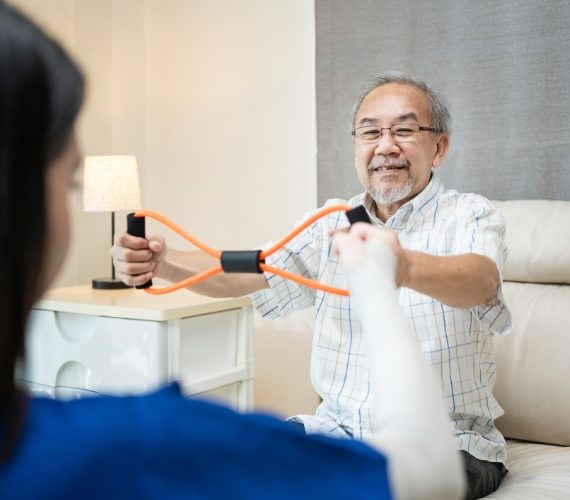
Our occupational therapists and occupational therapy assistants help your loved one regain the skills needed for safe, independent living after health changes such as an accident, orthopedic surgery, joint replacement or neurological condition.
They focus on restoring everyday activities such as dressing, bathing, cooking and home management, while recommending adaptive equipment and practical home modifications. By creating a safer environment, our team helps patients build confidence, improve independence and return to daily life with greater ease.
Speech Therapy
Therapy may include exercises to improve swallowing, strengthen and retrain the voice and enhance speech clarity. We also support communication tools and provide guidance to reduce aspiration and choking risk so patients can stay safe and confident at home.
For those recovering from stroke, neurological conditions, head and neck injuries or managing developmental challenges or hearing loss, our therapists deliver care that makes a meaningful difference. Learn more about our approach to care through our speech therapy services.

Rehabilitation by Condition
Common needs: Joint replacement, fractures, spine surgery or soft tissue repair
Key interventions:
- Progressive strength and range-of-motion exercises
- Gait training and safe use of walkers or canes
- Pain and swelling management strategies
- Functional training for daily activities (e.g., stairs, bathing or dressing)
Expected benefits:
- Faster, safer recovery and mobility gains
- Reduced pain and stiffness
- Lower risk of complications or re-injury
- Improved confidence with daily movement
Common needs: Stroke, Parkinson's disease, multiple sclerosis or brain injury
Key interventions:
- Mobility and balance retraining
- Speech, language and cognitive therapy
- Swallowing therapy and safety strategies
- Task-specific training to rebuild daily living skills
Expected benefits:
- Improved mobility, coordination and independence
- Better communication and cognitive function
- Safer swallowing and reduced aspiration risk
- Stronger recovery outcomes with early, consistent rehab
Common needs: Heart Attack, heart surgery, heart failure or cardiac procedures
Key interventions:
- Monitored, progressive exercise plans
- Education on heart-healthy lifestyle changes
- Medication adherence and symptom monitoring
- Energy conservation and activity pacing
Expected benefits:
- Improved cardiovascular endurance and strength
- Reduced risk of future cardiac events
- Better symptom control and quality of life
Common needs: Ongoing symptom management and prevention of exacerbations
Key interventions:
- Breathing techniques and pulmonary exercises
- Energy conservation and fatigue management
- Blood sugar monitoring support and lifestyle education
- Medication and symptom tracking
Expected benefits:
- Fewer hospitalizations and flare-ups
- Improved daily symptom control
- Greater independence in managing health
- Enhanced overall quality of life
Common needs: Age-related balance decline, frailty or fall risk
Key interventions:
- Balance and strength training
- Home safety assessments and modifications
- Mobility aid training (walkers or canes)
- Vision, footwear and environmental risk education
Expected benefits:
- Reduced risk of falls and injury
- Improved stability and confidence at home
- Safer navigation of daily activities
- Greater independence and peace of mind
Learn more about the ChristianaCare Safe Steps Program to see how you can reduce fall risk.
What to Expect from Rehabilitative Therapy
- Referral & eligibility: Getting started begins with a referral from your doctor or hospital team. We'll confirm eligibility for home health services – including homebound status and a need for skilled rehabilitation such as physical, occupational or speech therapy – based on Medicare guidelines.
- In-home evaluation: A licensed therapist visits your home to assess safety, mobility, communication and daily function. Together, you'll set clear recovery goals and receive a personalized therapy plan tailored to your condition and environment.
- Visit schedule & coordination: Your care team establishes a therapy schedule based on your needs and progress. We coordinate closely with your physician, provide caregiver education and share regular updates to keep everyone aligned on your recovery.
- Condition-specific protocols: Care is tailored to your diagnosis, using evidence-based approaches, such as mobility and speech/swallow therapy after a stroke, strength and gait training after a surgery or monitored exercises and education for cardiac conditions, aligned with best practices from organizations like Mayo Clinic.
- Progress & transition: As you improve, we adjust your plan and prepare you for the next phase–whether that's a home exercise program, transition to outpatient therapy or connection to community resources to support long-term independence.
Contact Us
New Castle County Office
Kent and Sussex County Office
Frequently Asked Questions
Yes, Medicare may cover in-home physical, occupational and speech therapy when specific criteria are met. Typically, patients must be considered homebound and require skilled care ordered by a physician. Services must be provided by a Medicare-certified home health agency and be part of a care plan that your doctor regularly reviews.
Home health rehab is designed for patients who have difficulty leaving home safely. Therapy is delivered in your home, focuses on restoring essential daily function and often involves caregiver training and home safety modifications.
Outpatient therapy takes place at a clinic and is generally suited for patients who are more mobile and can travel. It may involve more intensive or specialized equipment and a higher frequency of visits. Many patients transition from home health to outpatient care as they improve. Learn more about our approach to in-patient care through our physical therapy services.
In some cases, yes. While traditional cardiac rehab is clinic-based, home-based models are increasingly used for select patients, particularly when travel is a barrier or when clinically appropriate. These programs may include monitored exercise, education and lifestyle support, coordinated with your care team to ensure safety and progress.
Rehabilitation often begins very early – sometimes within 24-48 hours in the hospital, depending on medical stability. After discharge, home-based therapy can start quickly as part of a continuous recovery plan. Early and consistent rehab is key to improving mobility, communication and independence over time. Find out more about our Stroke Program.
Safety is a top priority. Your care team will:
- Assess fall risks and recommend home modifications (e.g., removing hazards or adding grab bars)
- Teach safe use of mobility aids and equipment
- Provide infection prevention, including proper hygiene and wound care
- Monitor progress and adjust care plans to reduce complications
- Educate caregivers so they can confidently support day-to-day safety
This coordinated approach helps patients recover with confidence while minimizing risks at home.
Related Content